
Gait Trainer: Posterior or Anterior Walker?
What Is a Gait Trainer and Who Is It For?
Walking is a natural learned process. It engages the entire body – from bones, joints and muscles to nerves, lungs, and the heart. Mobility aids used in gait therapy serve a number of specific purposes: promote movement by supporting weight-bearing, increase stability, help prevent and treat pain, distribute pressure caused by positioning, and support proper growth alignment.
These aids relieve the arms and hands from having to provide support and propulsion. They contribute to physical development, boost self-confidence, and enhance participation in daily life.
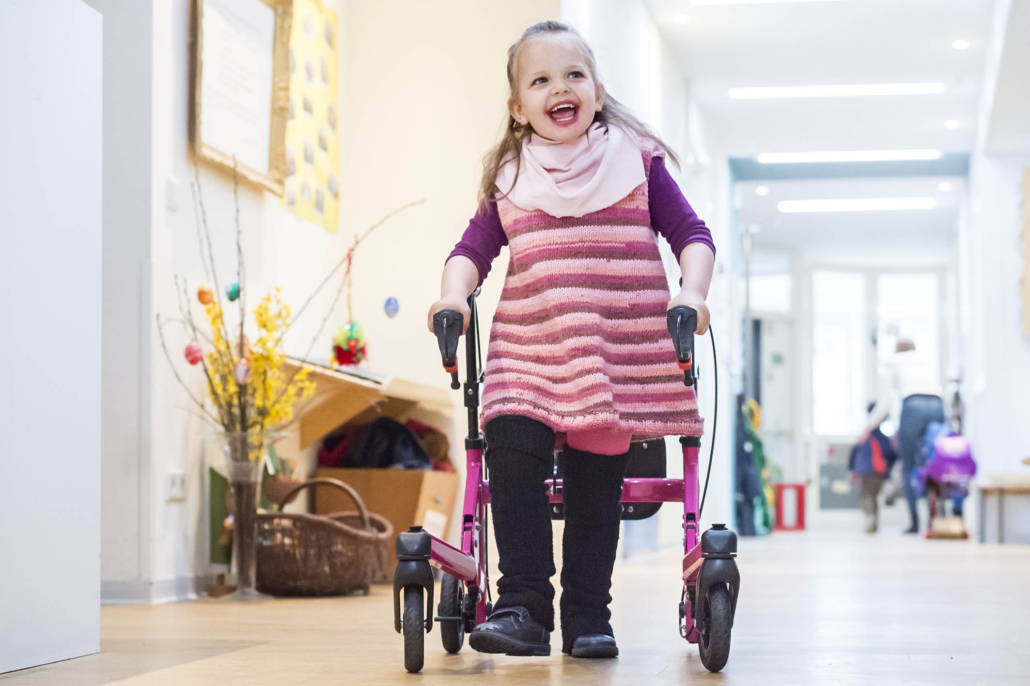
Rollators and gait trainers come in various types with different functions. They can either be pushed in front of the body (anterior) or pulled behind the body (posterior).
Compared to rollators, gait trainers can offer important additional features, such as a positioning saddle that helps offload even more weight from the legs and feet. Various pelvic and trunk supports can also be individually adjusted and mounted, allowing people with mobility impairments to receive the best possible support for their walking abilities.
How Do I Find the Perfect Gait Trainer for My Child?
Anterior walking aids like our marcy. are pushed in front of the body and provide security during the first steps. This makes marcy. a reliable support, even in exciting or unpredictable everyday situations.
If the user has weak core muscles, posterior walking aids like the gait trainers from our malte.-family, which are pulled behind the body, are recommended. Posterior walkers support upright posture and promote a more natural and stable walking pattern.