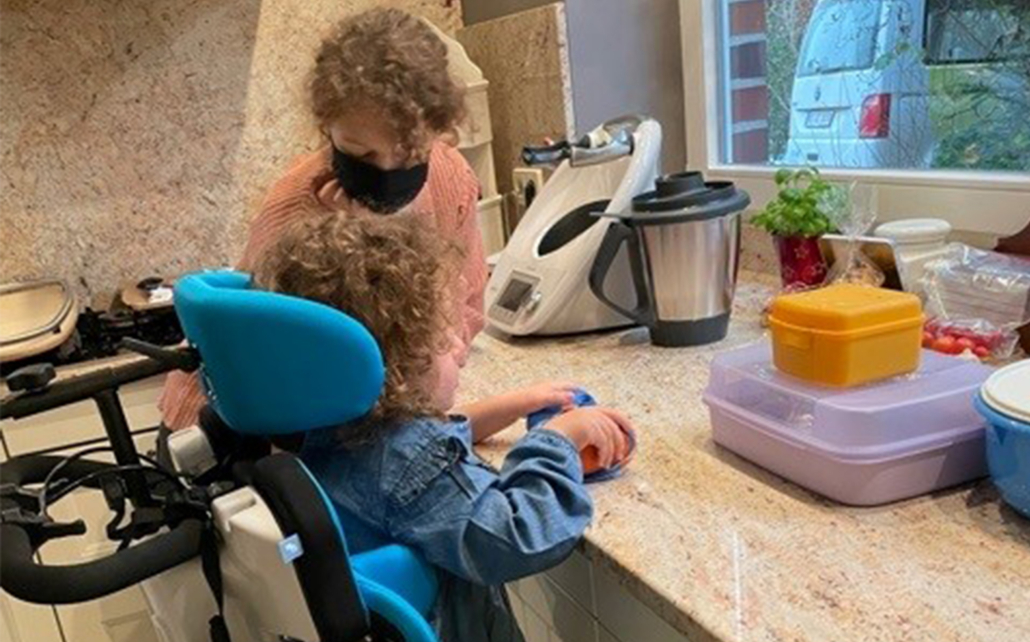
Kitchen party at till.
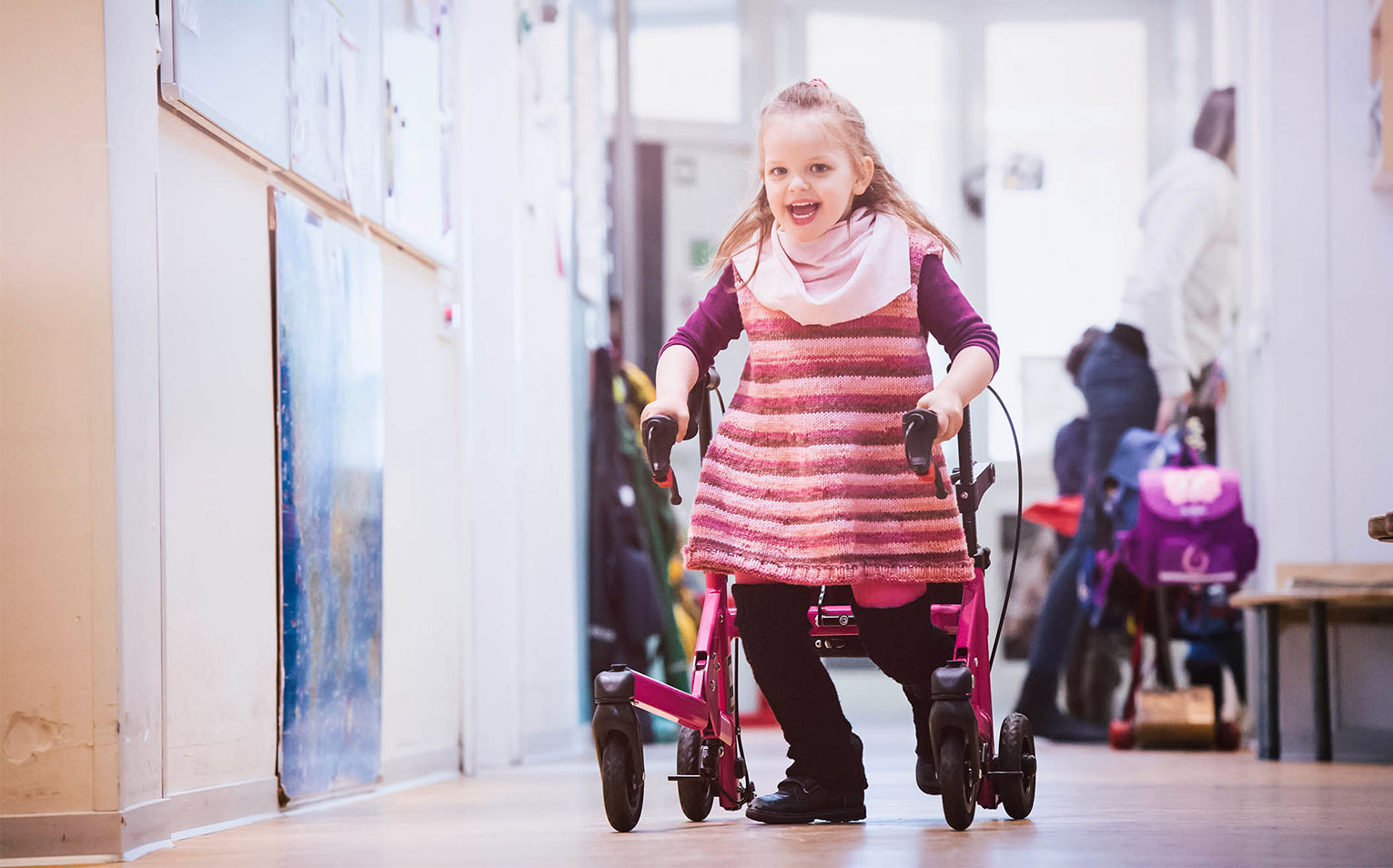
Amelie has spinal muscular atrophy (SMA). Despite the neurodegenerative disease, the five-year-old girl has discovered a pure love of cooking and baking. We introduce Amelie and the rare disease SMA.
You either love them or hate them: kitchen machines that cook, fry and simmer at the same time, iron the laundry, clean the windows … Ok, the last two points are wishful thinking. Amelie, at any rate, can’t imagine life without the appliance. The 5-year-old loves to cook with her mother and therefore even has a children’s version of it in her play kitchen.
Amelie has a rare disease: her diagnosis is spinal muscular atrophy (SMA). Because of the damaged nerve cells, muscle movements become increasingly poorly controlled as the disease progresses: muscle atrophy and increasing signs of paralysis are the result. The fact that Amelie cannot stand due to her illness often makes things a little more complicated. From her wheelchair, she cannot reach the work surface in the kitchen and her mother can only fit into the play kitchen with great difficulty.
Standing trainer gives Amelie security while training at the same time
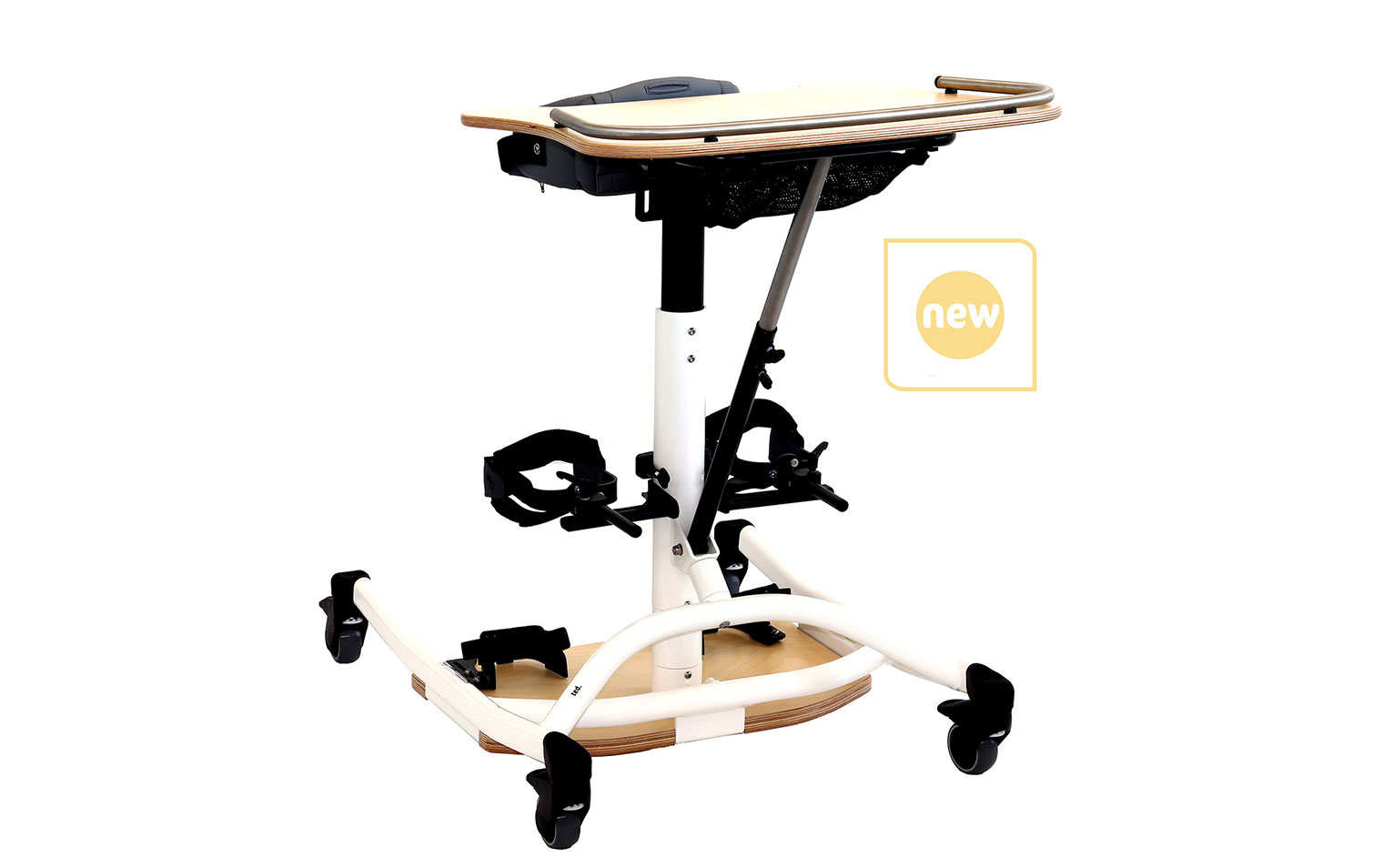
That’s why Amelie has a till. standing trainer. It holds her firmly and gives her the stability that her muscles don’t have. And because she doesn’t have to concentrate on standing, she can watch when the butter is ready to be churned and add eggs and flour to the dough at the right moment.
Standing is exhausting for Amelie. Because she spends a lot of time sitting or lying down, her blood circulation is not trained. That is why it is so important that she does things at home in an upright position. This also supports the development of the bones, which become stronger and grow better through the strain. In this way, cooking and baking helps to minimise the effects of the disease.
At eye level with friends
Amelie likes to spend time with children from the kindergarten in the afternoons. They go for a bike ride together or play. Amelie needs time to rest in between. When her muscles are overworked, it takes a long time to recover. That’s why she rarely goes out on dates.
Amelie cannot visit her friends because it is too cramped in most houses. She has difficulty negotiating the entrance steps with her e-wheelchair.
There are also barriers in her own house. That’s why her parents are currently planning the further conversion of the house. So far, they have always carried Amelie upstairs – that won’t work in the long run. But the planning and financing of an outside lift is costly and time-consuming.
Hope in a new drug
In recent years, there has been great progress in the treatment of SMA. New drugs have come on the market that can stop the progression of the disease. This is a great hope for the family, but also comes with concerns: Have the drugs really matured? Will it help our child? Will the effect last in the long term? And are there side effects?
These are complex questions. Answers to many of these questions can be found in the specially offered webinar on 2 November 2021, when we will also discuss the effects on therapy, the provision of aids and everyday life with SMA. Special diseases and disabilities are also part of our training programme. You can look forward to our events in 2022!
Spinal muscular atrophy
Spinal muscular atrophy 5q (SMA) is a motor neuron disease, i.e. a disease of certain nerve cells in the spinal cord. These nerve cells transmit impulses to the muscles that are responsible for voluntary movements such as crawling, walking and head control.
Spinal muscular atrophy is a relatively common “rare disease”: about one in 6 -10,000 newborns is affected.
SMA affects all muscles of the body, with the so-called proximal muscles (those closest to the trunk, e.g. shoulder, hip and back muscles) being most severely affected.
Sensory perceptions, i.e. seeing, hearing, smelling, tasting and skin sensitivity are not affected. Intellectual abilities are also not affected. On the contrary, it is often observed that patients with SMA are mentally alert and sociable.
Patients with SMA typically lose muscle strength as the disease progresses. This can happen very quickly as part of a growth spurt in children, or it can happen very gradually. It may be that patients with SMA are often relatively stable in their motor functions over a long period of time. However, the tendency to lose function is always present and persists into adulthood.