Which walking trainer is right for my child with a disability?
What is a walking trainer and who is it suitable for?
All walking aids – from walking sticks and rollators to walking trainers – are designed to support people with mobility. They transfer some of the body weight to the hands and help the user maintain their balance.
Rollators and walking trainers are available in a variety of designs with different functions. They can either be pushed in front of the body as an anterior walking aid or positioned behind the body as a posterior walking aid. Compared with rollators, walking trainers offer useful accessories such as a positioning saddle, which can take even more weight off the legs and feet. A range of individually adjustable support pads can also be fitted to a walking trainer. This enables people with limited mobility to receive the best possible support for walking.
Different walking trainer models for children and adults share the same basic concept: they are lightweight, mobile and easy to manoeuvre. Support pads around the pelvis and trunk provide stability when standing and walking, while an optional seat supports part of the user’s body weight. Each aid can be individually adjusted to the person’s needs. Additional equipment such as headrests and hand grips is also available.
Aids used in gait therapy perform a number of important functions. These include encouraging weight-bearing mobility, reducing spasticity through greater stability, preventing and treating pain, distributing pressure caused by prolonged positioning and supporting healthy growth. They can also relieve the arms and hands of some of the effort required for support and movement, while contributing to development, confidence and participation in everyday life.
How do I find the right walking trainer for my child?
Walking is a natural process that has to be learned. The first steps are often still uncoordinated, but typically developing children usually master walking by around the age of three. The entire body is involved in walking – from the skeleton and joints to the muscles, nerves, lungs and heart.
Anterior or posterior walking trainer?
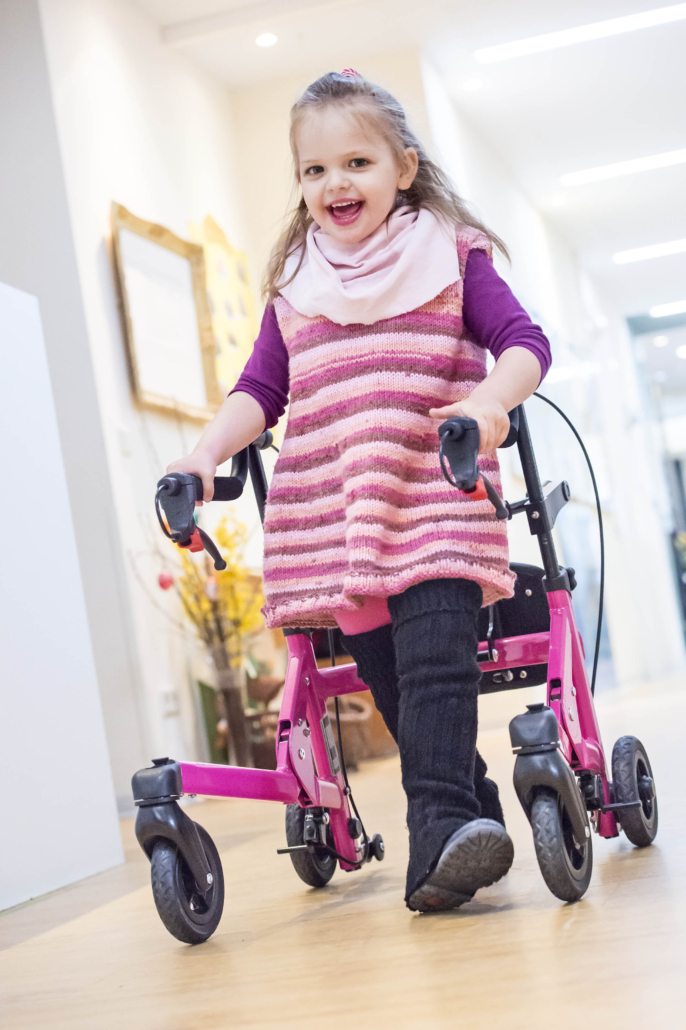
Walking is a complex process. Shifting weight from one leg to the other, rotating the hips, tilting the pelvis and moving the body from side to side are all movements that children with limited mobility may need support with. Walking aids can therefore be beneficial from the very first attempts at walking. Depending on the individual provision and therapy goals, a distinction is made between anterior and posterior walking aids.
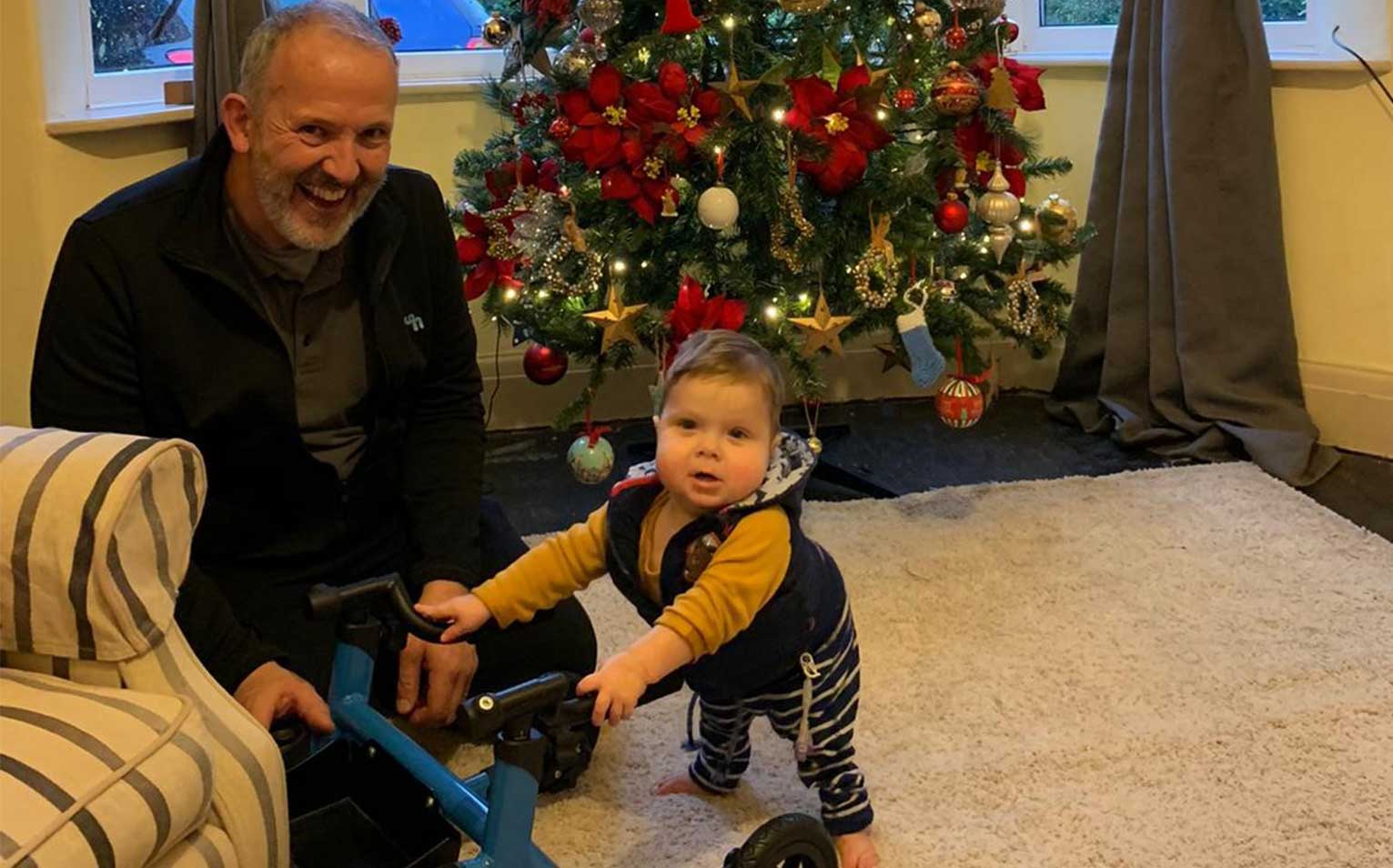
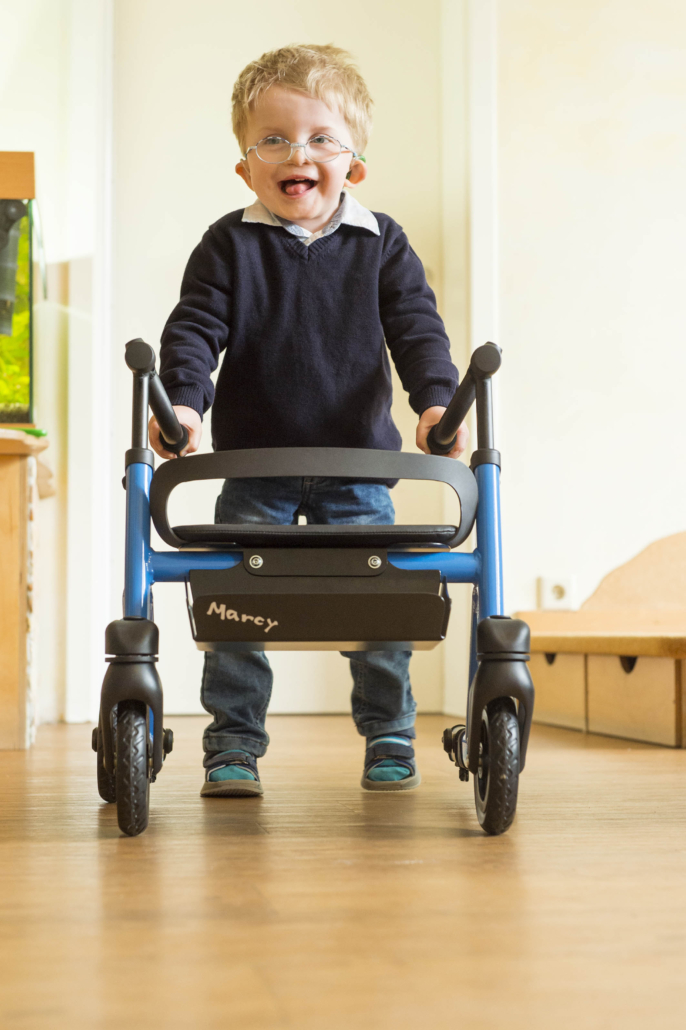
Anterior walking aids, such as our marcy., are pushed in front of the body and provide security during a child’s first attempts at walking. This also makes marcy. a reliable source of support in exciting or challenging everyday situations.
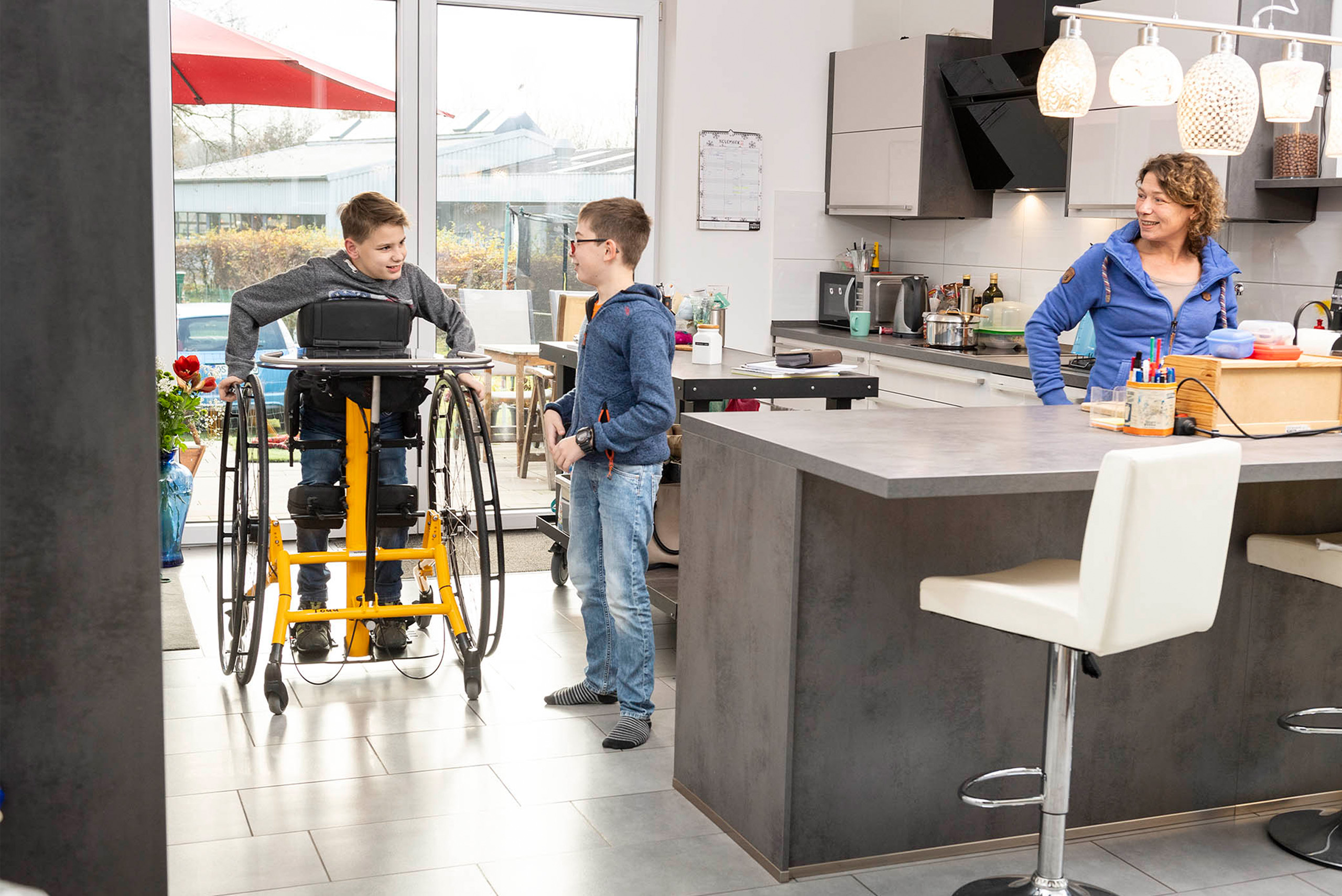
For children with weaker trunk muscles, posterior walking aids such as the walking trainers in our malte. family may be recommended. These are positioned behind the body and pulled along as the child walks. Posterior walking aids encourage a more upright posture and can help improve gait quality.
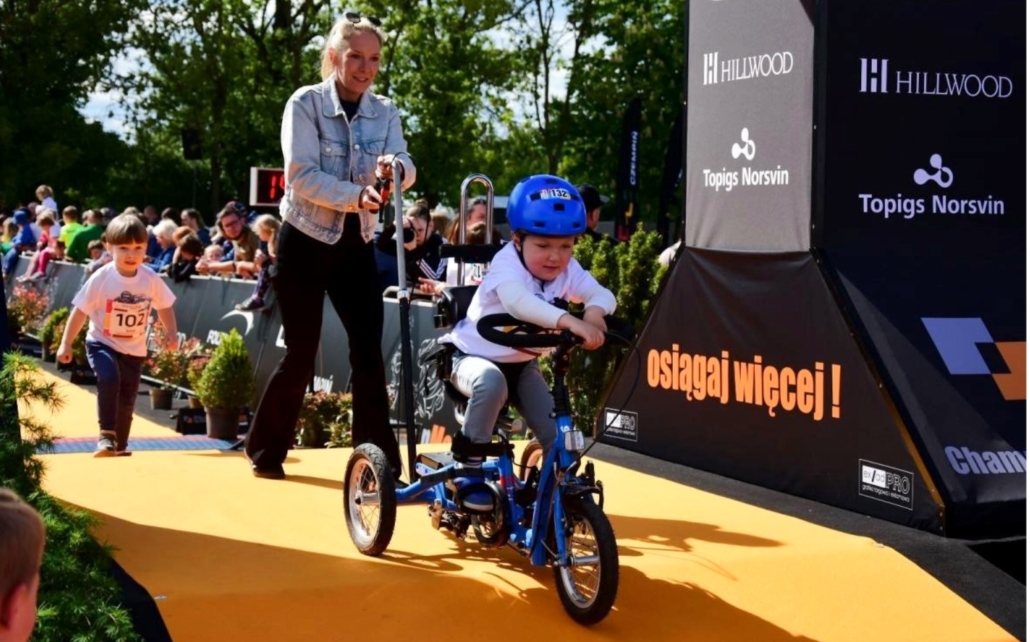
Being able to move independently does not depend on the right walking aid alone. Recumbent bikes, tricycles and therapy bikes can also support the mobility of children with disabilities. They can help train muscles and balance, improve misalignments and regulate muscle tension.
Cycling can also enhance wellbeing by stimulating the cardiovascular and digestive systems. Exploring the surroundings by bike can therefore benefit both body and mind. Discover our momo tricycle.