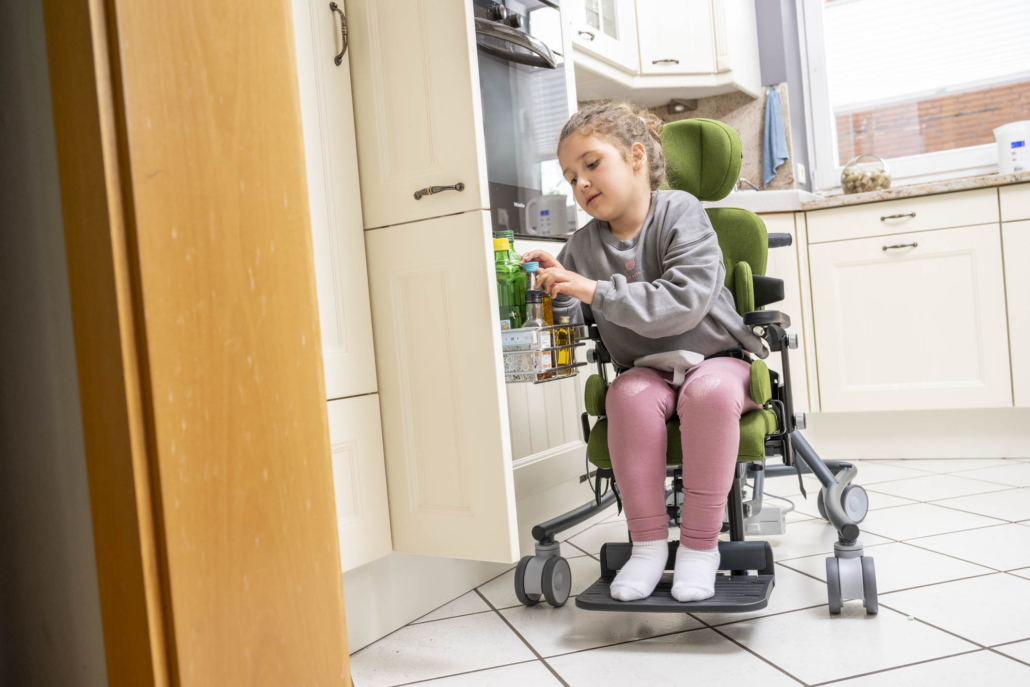
Supportive Seating Pathway
A clear step-by-step guide for families – and the professionals who support you.
This pathway explains how a child is identified for supportive seating, how seating is assessed, and what happens from recommendation to delivery and review.
The process, step by step
1) Identifying a need
Concerns may be noticed by parents/carers and/or a healthcare professional such as an Occupational Therapist, Physiotherapist, Paediatrician, or Health Visitor.
2) Referral and assessment planning
A referral is made for a full postural assessment, and if a diagnosis is not yet clear, further medical investigations may be arranged.
3) Creating a treatment plan
A treatment plan is designed around your child’s short- and long-term needs, looking at the child as a whole (holistic care).
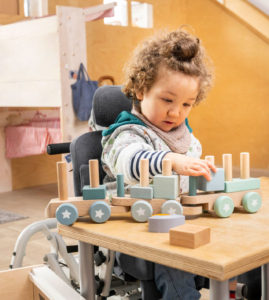

4) Understanding postural management needs
A Physiotherapist and/or Occupational Therapist determines postural management needs and considers what support is required.
5) Building a 24-hour posture plan
A 24-hour management plan may be developed, aiming to vary posture across the day depending on your child’s activities and routines.
6) Exploring suitable seating options (with parents)
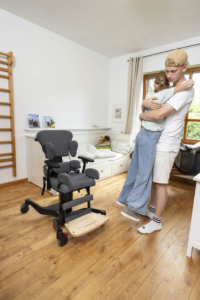
The therapist identifies seating systems that may meet your child’s needs and discusses these with you. Visuals (photos) can help set expectations.
 7) Seating appointment with a Product Specialist
A Product Specialist is invited to attend with the proposed seating system(s). This can take place at home, school, a clinic, or another setting that suits your family.
Appointments typically last 20–45 minutes, depending on complexity.
8) Trial, positioning, and parent input
Your child is assessed in the seating system. The leading therapist directs final positioning and accessories. Sometimes 2–3 systems may be trialled to compare benefits. Parents’ questions and opinions are welcomed.
9) Quote and funding route
After a successful assessment, the Product Specialist produces an itemised quote and sends it to:
-
the therapist (if funded by social care / NHS),
-
the parents (if privately funded or charity supported), or
-
the school (if funded through education).
10) Funding decision and potential faster provision
Funding is agreed, or a management team may recommend an appropriate product already held in stores—often faster to provide.
11) Delivery and professional set-up
Once a date is confirmed, the seating system is delivered to the agreed address. The therapist or Product Specialist is responsible for set-up.
12) Final fitting, parent training, and review plan
Set-up mirrors the initial assessment to ensure the seating fits your child’s measurements and that accessories support posture and comfort. You will also have time to ask questions and learn basic chair functions. A review timeframe is agreed with the therapist to confirm ongoing suitability.