Sitting Means Participating!
As a specialist in therapy chairs for children and adolescents, one of our core competencies is the topic of sitting. Even the simplest measures often open up new developmental opportunities for children.
Sitting means being included!
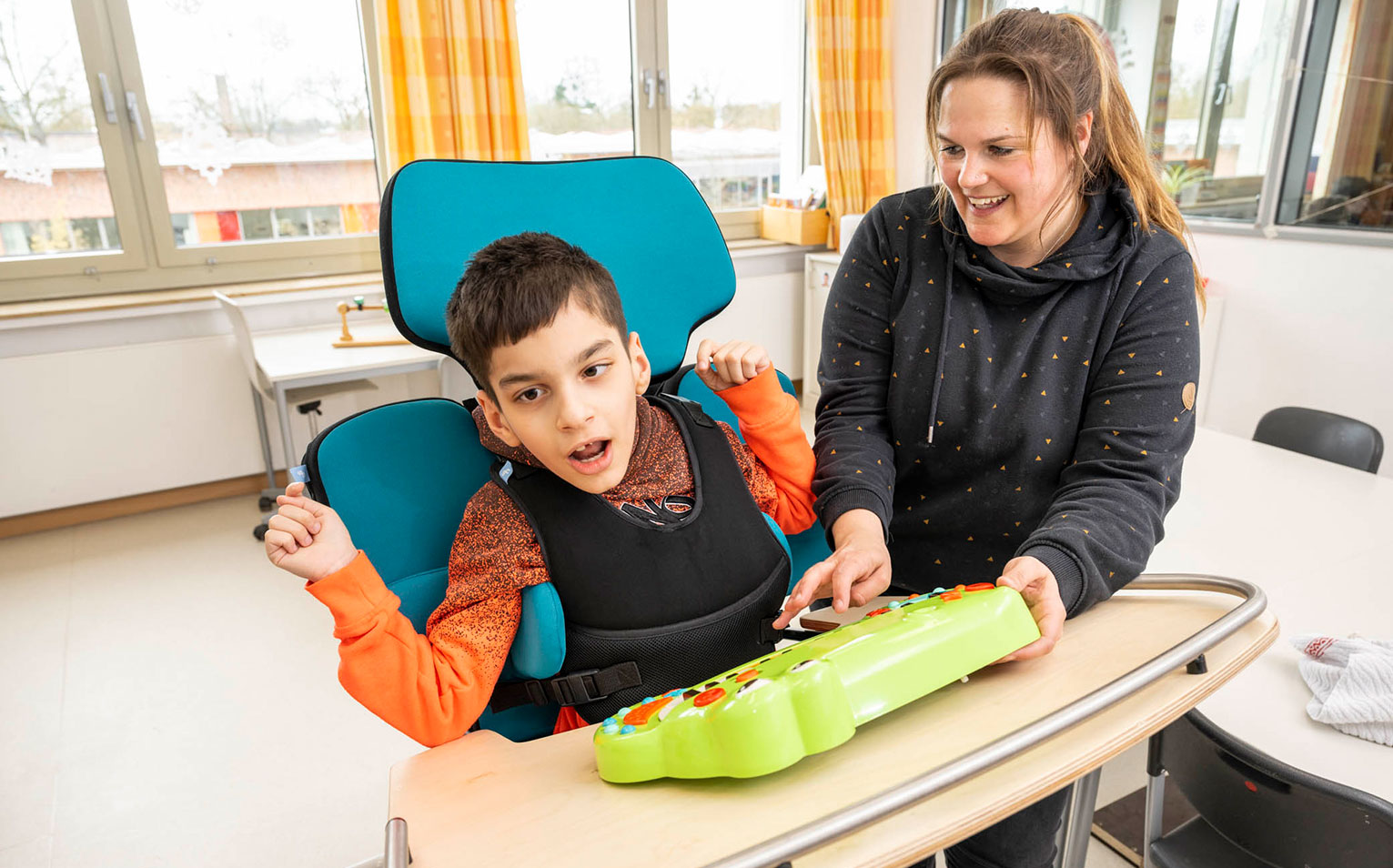
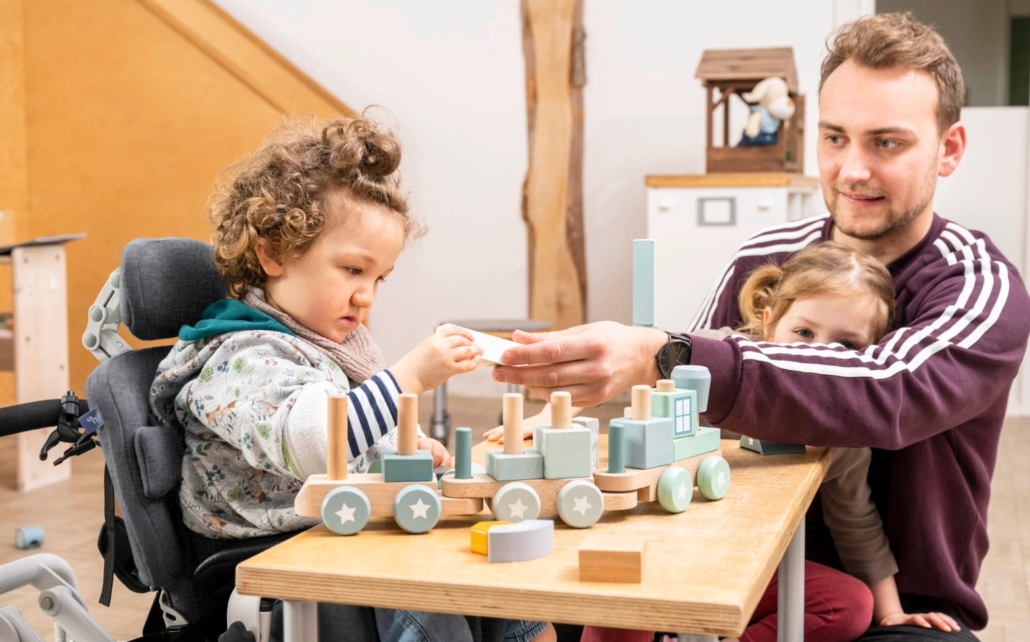
If a child cannot sit by the age of one, it is important to provide a therapy chair. This allows the child to sit at the table with the family, be involved, and play with other children. That’s why the first therapy chair often enters the home around the child’s first birthday.
We sit—because we meet at the table: to talk, to eat, to work. Taking this step is crucial. Without a therapy chair, children often expend all their energy just to stay upright, leaving too little for other developmental milestones. When we provide a child with a proper seated posture, we promote their development. A child who cannot sit independently receives a chair that supports and holds them—offering freedom to play, learn, observe, and manipulate objects.
When selecting and configuring a therapy chair, we ensure the child receives exactly the support they need – not too much and not too little.
A therapy chair with adjustable settings and additional functions enable precise adaptation to the child’s body dimensions. This promotes correct posture by aligning and stabilising the pelvis. Lateral support for the rib cage can also be provided to prevent constant tilting to one side. This is crucial for the chair’s function and ensures a comfortable seating experience.
And since children grow, therapy chairs grow with them. Seat length, seat depth, seat width, and backrest height can all be easily adjusted as the child grows. The chair supports an upright and stable posture: pelvic guides align and stabilize the pelvis, while trunk and thoracic supports keep the upper body upright. Positioning aids and straps prevent the body from slipping. This improves head control, and the headrest ensures proper head positioning and relieves the weight. When choosing a headrest, a balance between support and freedom of movement must be found. This makes it easier to listen attentively or engage in conversation.
Correct Positioning Matters
The footplate is essential for sitting stability, correct alignment of the thigh bones (especially in cases of hip deformities), and also makes it easier to get in and out of the chair. Good positioning supports breathing, enhances attention, promotes healthy development of bones and joints, and strengthens body control and coordination.
When choosing the therapy chair, we also consider where and how it will be used. Will it be used in kindergarten, school, or at home? Who will be placing the child in the chair? Will the chair be used only briefly, such as during meals, or throughout the morning?
All these factors help ensure the chair meets your child’s needs. To evaluate all these aspects, we use the bio-psycho-social model, which views the life of the child and their family as a whole and underpins the “International Classification of Functioning, Disability and Health” (ICF).
There is a specifically adapted version of this model for children and adolescents, which serves as the foundation for choosing assistive devices.