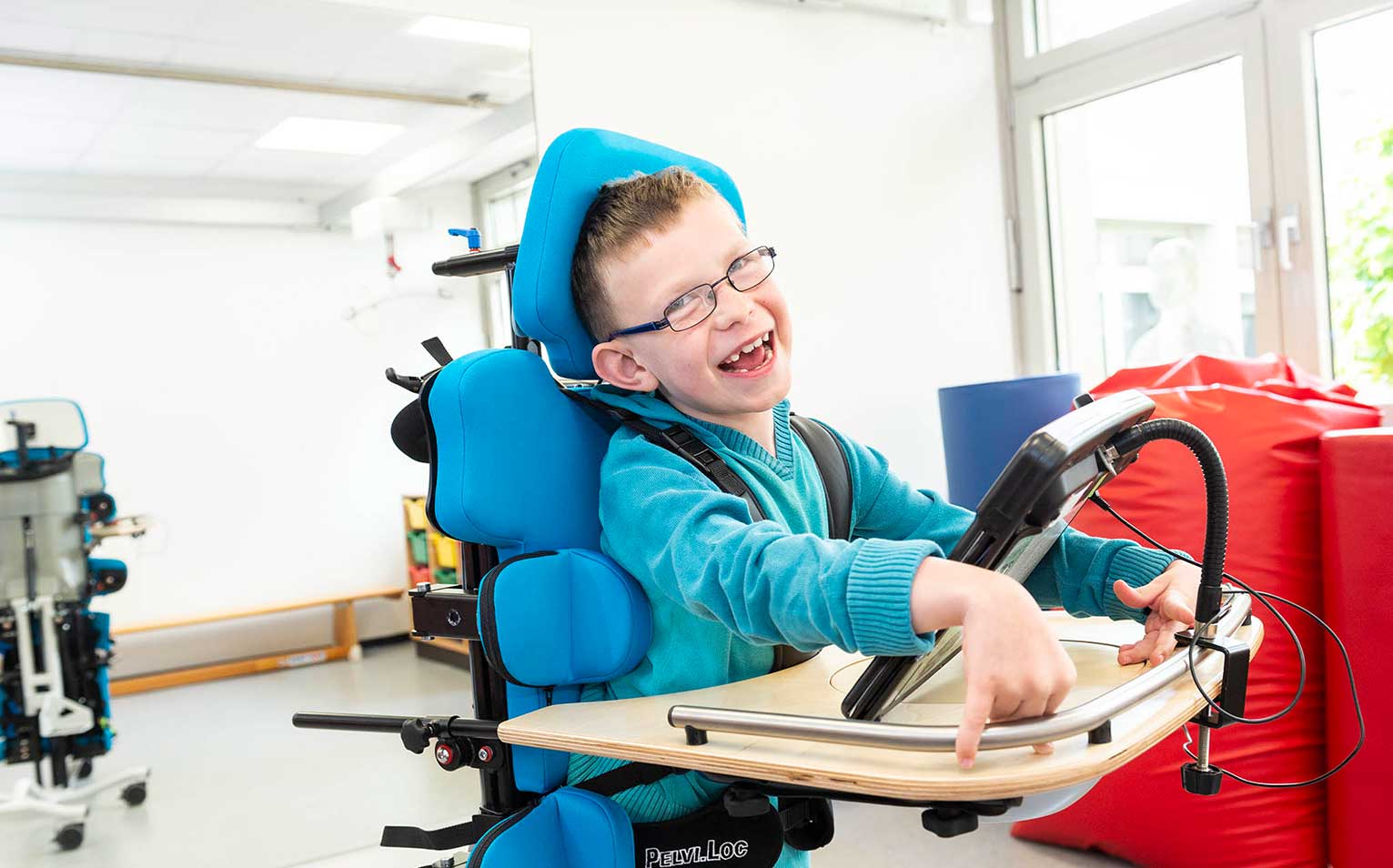
Sitting – because we meet at the table…
…to talk, to eat, to work.
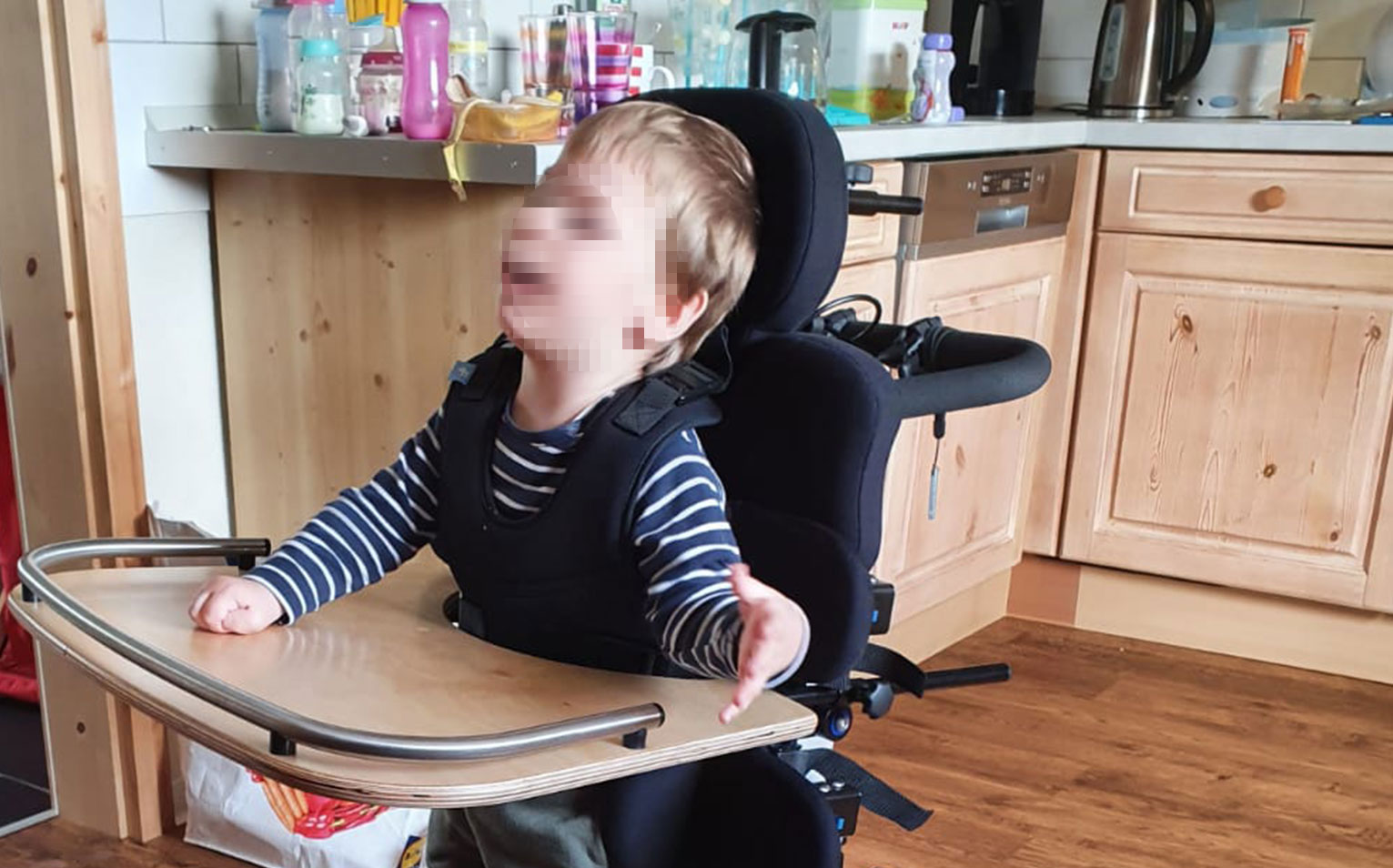
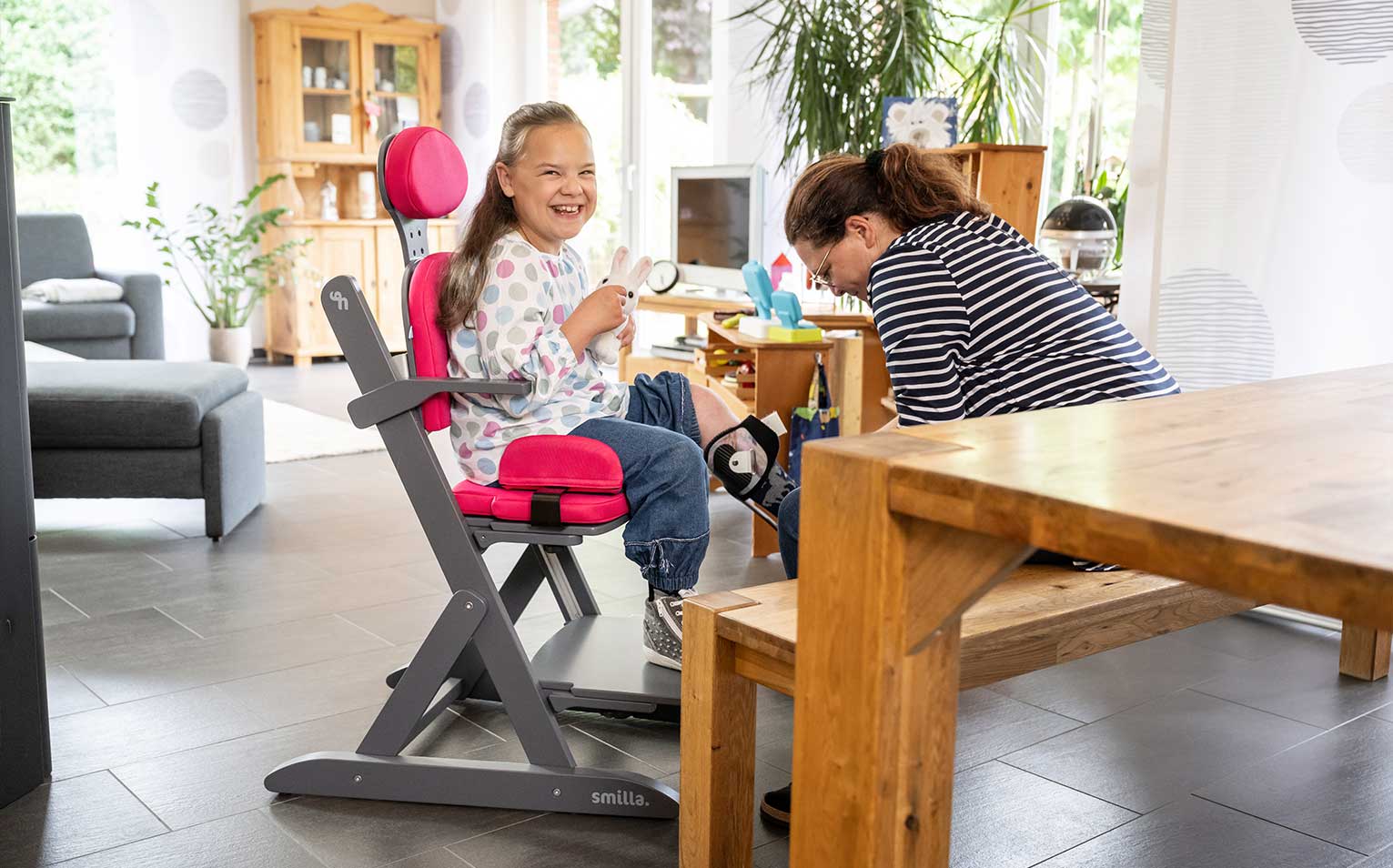
If a child cannot sit independently by the age of one, it is important to provide a therapy chair. This enables the child to sit at the table with the family, to participate, and to play with other children. For this reason, the first therapy chair often enters the home around the child’s first birthday.
Taking this step is essential: without a therapy chair, the energy required to achieve and maintain an upright sitting position is often quickly exhausted, leaving insufficient energy for further developmental steps. By enabling adapted sitting, we actively support the child’s development.
The right amount of support.
A child who cannot sit independently is provided with a chair that supports and stabilises them, while at the same time offering freedom to play, learn, observe and manipulate objects. When selecting and configuring a therapy chair, we ensure that the child receives exactly the support they need –
not too much and not too little.
A therapy chair with individual adjustment options and additional functional elements allows precise adaptation to the child’s body dimensions. This promotes correct posture by aligning and stabilising the pelvis. In addition, lateral rib support can be provided to prevent the child from continually leaning to one side. This is essential for the functionality of the chair and ensures a comfortable sitting experience.
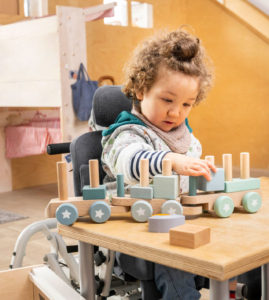 Chairs that grow with the child.
And because children grow, therapy chairs grow with them: seat length, seat depth, seat width and back height adapt to the child’s growth and can be easily adjusted. The chair supports an upright and stable posture by guiding and stabilising the pelvis, while trunk and thoracic supports keep the upper body aligned. Positioning aids and harnesses also prevent the body from slipping.
This improves head control, and the headrest provides targeted head positioning while relieving the weight of the head. When selecting a headrest, however, a balance must be found between support and freedom of movement. This makes attentive listening and interacting with others easier.
The footrest is crucial for stability while sitting, for the correct alignment of the femurs (for example in cases of hip deformities), and also facilitates getting in and out of the chair.
Benefits beyond sitting.
Good positioning supports breathing, promotes attention, encourages healthy development of bones and joints, and strengthens body control and coordination. When selecting a therapy chair, consideration is also given to where and for what purpose it will be used. Will the chair be used in nursery, at school or at home? Who will place the child in the chair? Will the chair be used only for short periods, such as during meals, or throughout the entire morning? All of these factors contribute to selecting the chair that best meets the needs of your child.
To capture all of these aspects, we are guided by the bio-psycho-social model, which views the life of the child and their family as a whole and also underpins the International Classification of Functioning, Disability and Health (ICF). This model serves as the basis for the selection of assistive devices. A specifically adapted version of this model exists for children and young people.
*Evidence refers to the information and data collected through systematic research and studies to support or refute hypotheses or theories.