The Influence of Dynamic Sitting on Trunk Stability
On the Influence of Dynamic Sitting on Trunk Stability and Participation
Based on: Dieterle, Jasmin (2025). “Effects of a Therapy Chair on Trunk Stability in a Child with Cerebral Palsy – A Single-Case Study”, Bachelor’s thesis in the degree program Occupational Therapy, Speech Therapy, Physiotherapy at Osnabrück University of Applied Sciences.
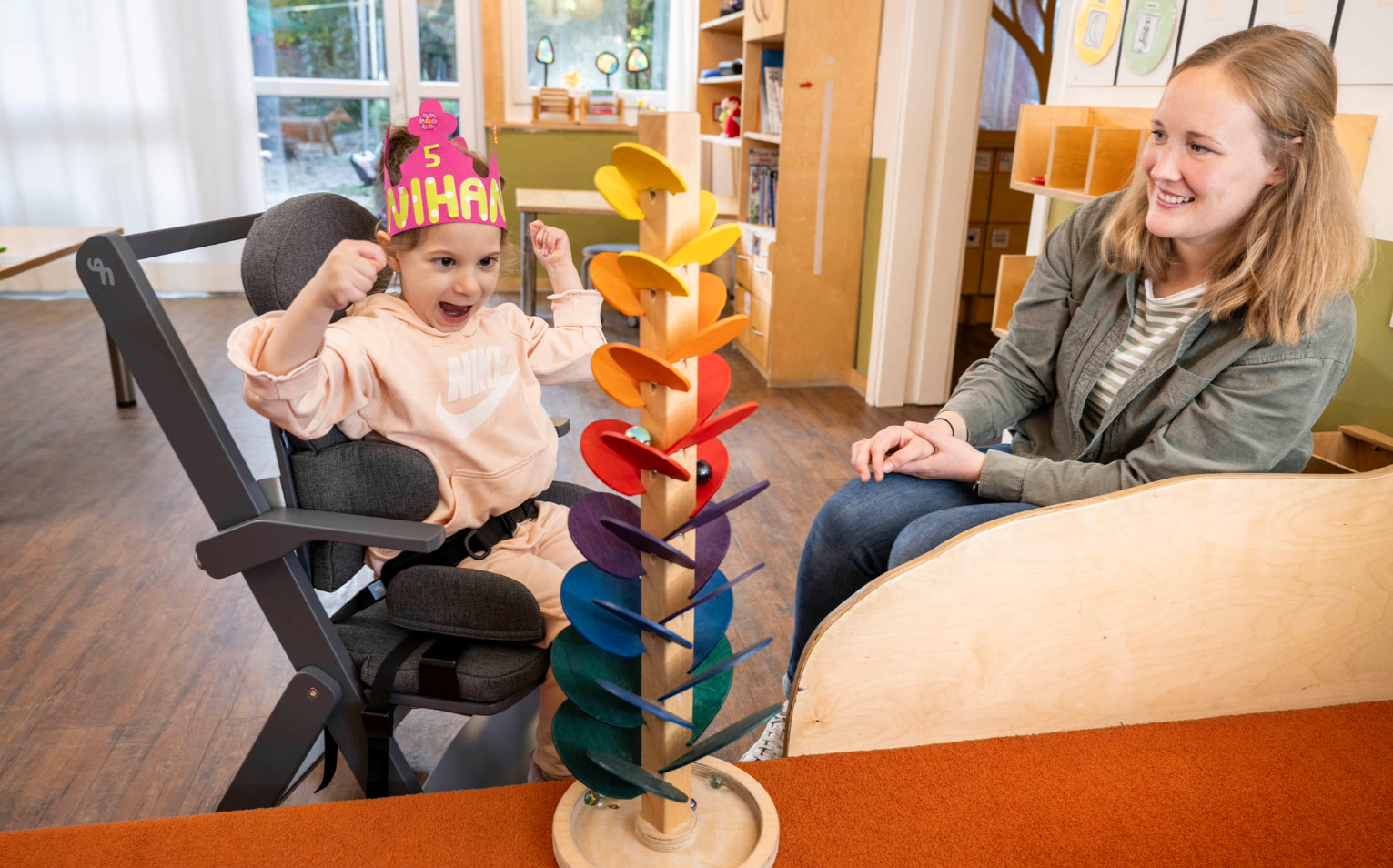
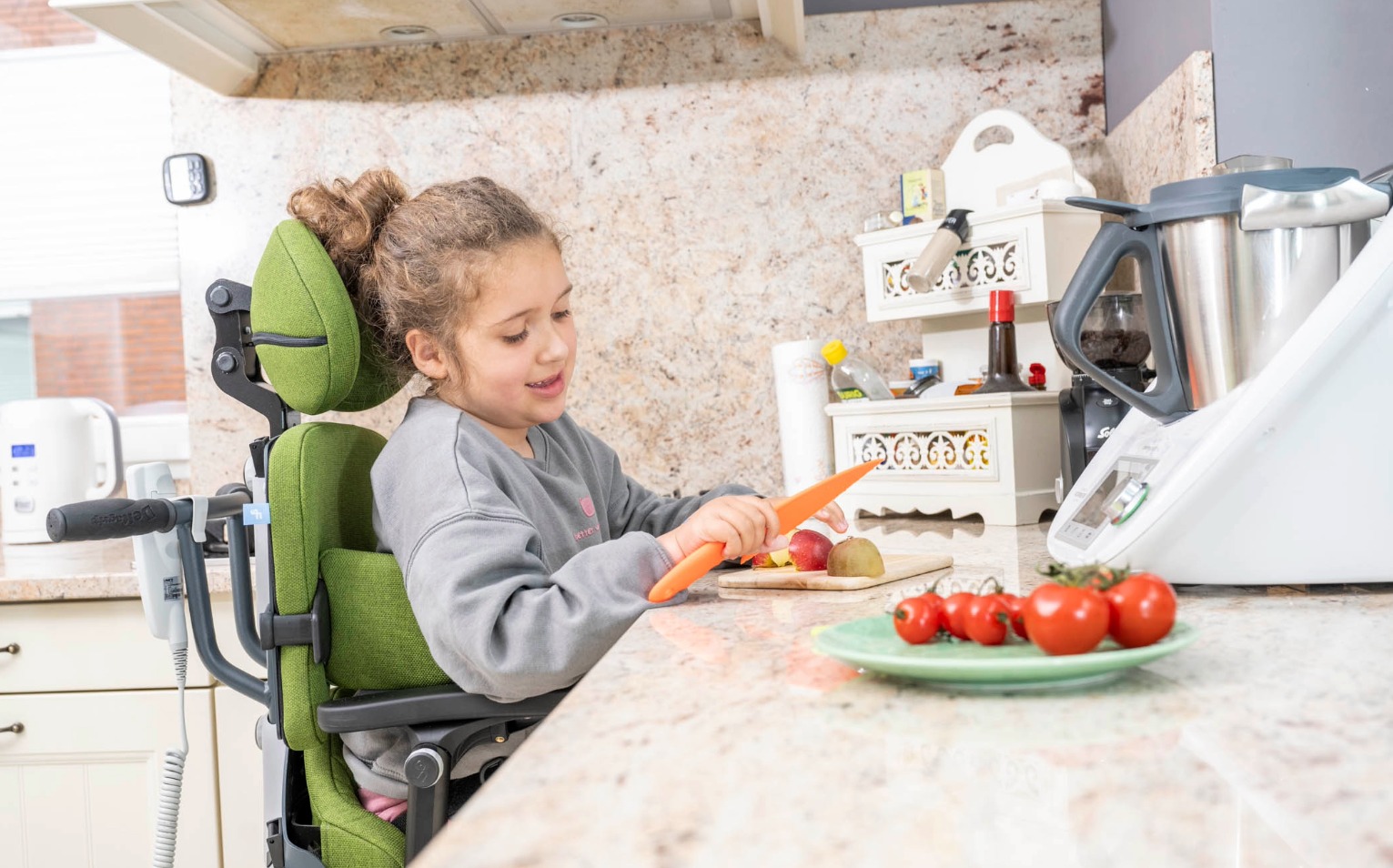
Many children and adolescents with cerebral palsy or other movement disorders spend a significant amount of time sitting each day. Seating aids such as therapy chairs can help ensure that children are optimally positioned. For example, limitations in trunk stability can be compensated for with proper pelvic positioning and, if necessary, upper body support with lateral guidance. Secure positioning allows the child to expend less effort and attention on maintaining an upright posture and to focus on more enjoyable activities like eating, playing, or learning [1], [2], [3], [4].
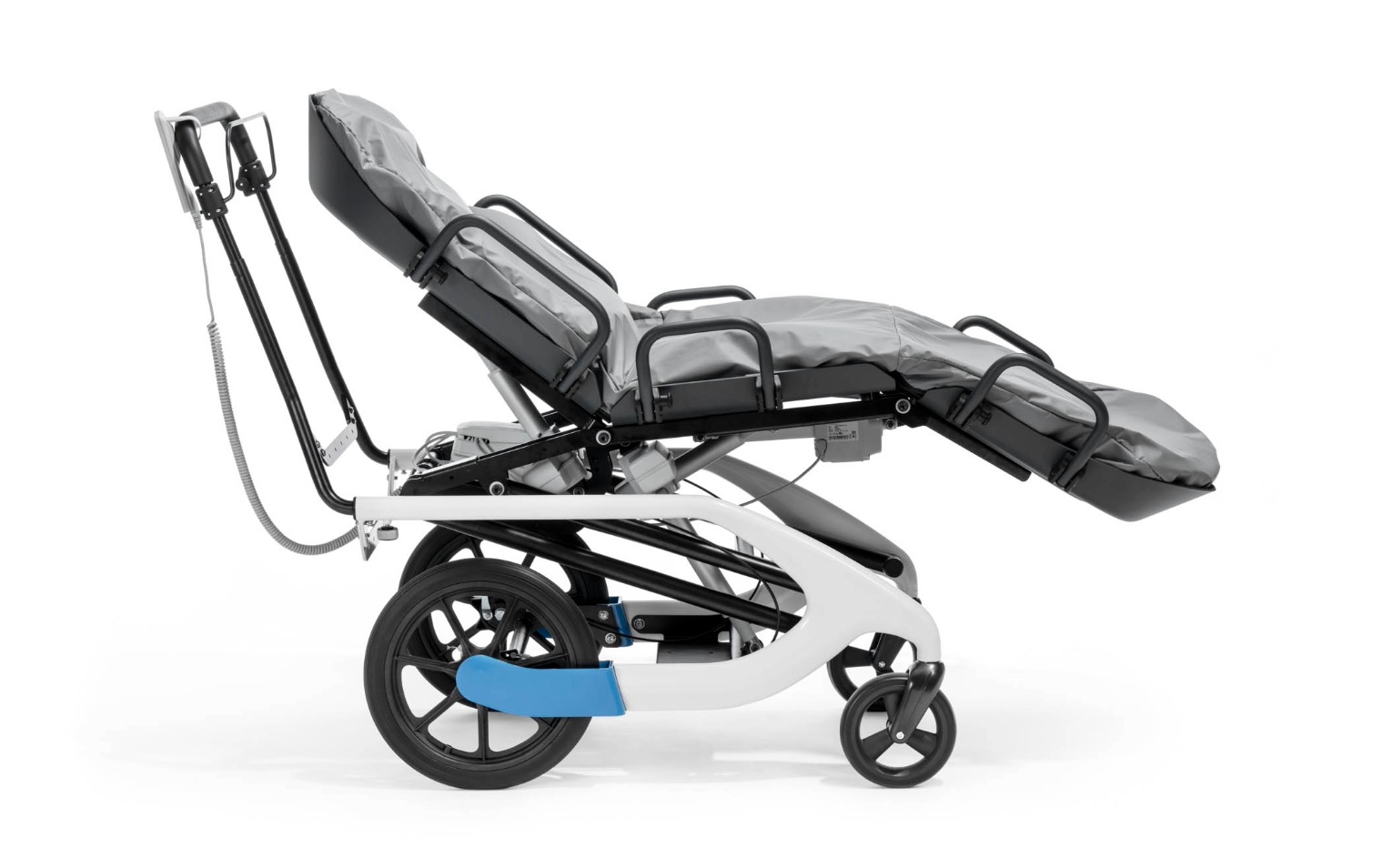
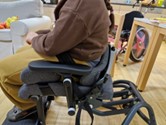
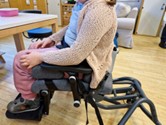
It is important to find the right balance between support and freedom of movement. The requirements can vary depending on the activity. Therefore, the seating position and the supportive elements of a therapy chair can be easily adjusted. The therapy chair madita-fun. can be equipped with a removable backrest. Children with mild impairments in trunk stability can thus also practice sitting without upper body support. A well-aligned pelvis supported by the pelvic support and feet firmly placed on a footrest can aid in this process.
Implementation of the case study
In a single-case study, we investigated whether regular sitting without a backrest has an influence on trunk stability and participation in a school-aged child with cerebral palsy. The child was observed while sitting for one hour per school day without a backrest over a period of three weeks. Additionally, two tests were conducted before and after the intervention period to assess trunk stability: the Segmental Assessment of Trunk Control (SATCo) and the Trunk Control Measurement Scale (TCMS) [5], [6]. The child’s participation in daily school life was evaluated using an adapted version of the School Function Assessment (SFA).
The child in our study already showed good trunk stability at the beginning, so the two tests did not reveal any significant improvements. The SATCo test yielded the maximum score of 20 both before and after the intervention. The TCMS score increased slightly from 4/10 before the intervention to 6/10 after. The participation score also showed no relevant change (48/120 before and 46/120 after the intervention). However, we observed that the tasks in the TCMS test were generally completed more quickly at the end of the study (see Figure 1).
Evidence of enhanced concentration
Tasks 13 and 14L (reaching forward and to the child’s dominant side) were performed noticeably faster after the intervention. Tasks 14R and 15L (reaching to the right and from the left across the midline to the right) showed only minor differences in duration. Task 15R (reaching with the right hand across the midline to the left) could only be successfully performed after the intervention. This improvement might be due to either the child becoming more familiar with the test situation or improved trunk stability.
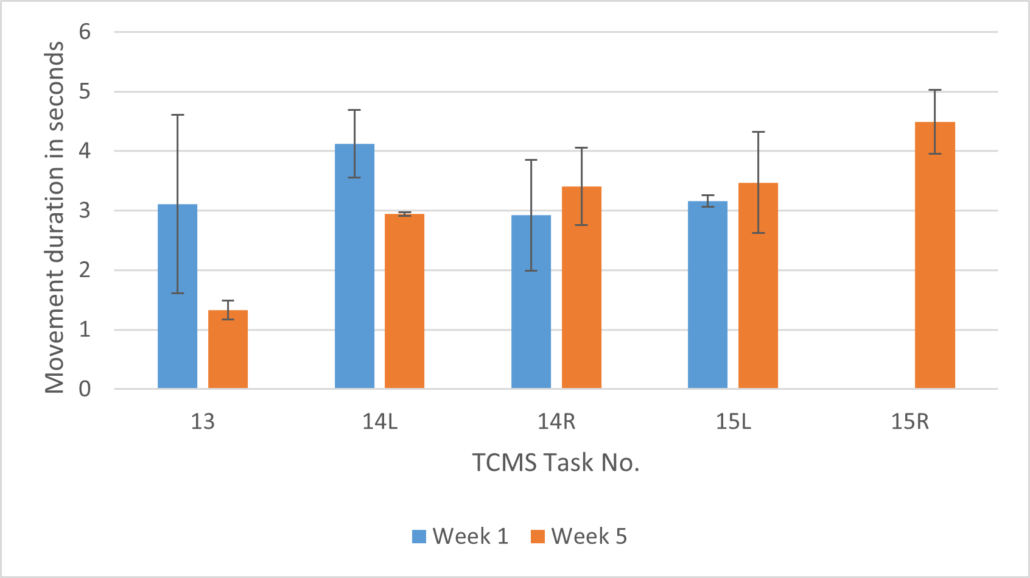
Figure 1 | Time Required to Complete the Tasks of the TCMS Test. The duration was measured from the start of movement to the moment the target object was reached. Mean values with standard deviation are shown.
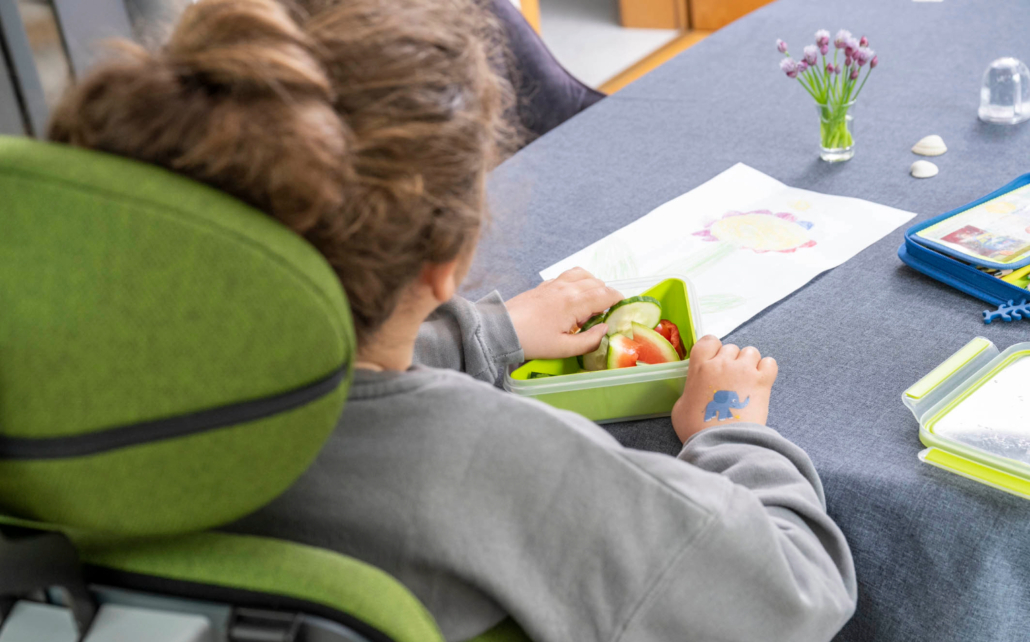
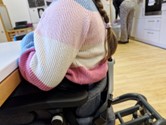
Observation of the child during the phases of active sitting (without a backrest) revealed that the child made use of the increased freedom of movement. On each of the 15 school days during the intervention period (sitting without backrest), the child was able to sit for the planned one-hour session without a backrest. The child’s posture was regularly adjusted. Such changes in position are also typical for people without physical impairments. In office environments, sitting positions are changed approximately every 6–9 minutes [7], [8].
The child in the study used this freedom of movement to turn towards a conversation partner, food, or an object, or to move away when something or someone came too close.
In conclusion, it can be stated that…
Overall, we observed that the child made use of the mobility afforded by sitting without a backrest. To make a final assessment of the effect on trunk stability, further observations are necessary. Both the therapists and the family experienced this new use of the madita-fun. chair as positive and plan to continue practicing dynamic sitting even after the conclusion of the study.
[1] D. Sahinoğlu, G. Coskun, and N. Bek, “Effects of different seating equipment on postural control and upper extremity function in children with cerebral palsy,” Prosthet Orthot Int, vol. 41, no. 1, pp. 85–94, Feb. 2017, doi: 10.1177/0309364616637490.
[2] P. J. Rigby, S. E. Ryan, and K. A. Campbell, “Effect of Adaptive Seating Devices on the Activity Performance of Children With Cerebral Palsy,” Arch Phys Med Rehabil, vol. 90, no. 8, pp. 1389–1395, Aug. 2009, doi: 10.1016/j.apmr.2009.02.013.
[3] M. Angsupaisal, C. G. B. Maathuis, and M. Hadders‐Algra, “Adaptive seating systems in children with severe cerebral palsy across International Classification of Functioning, Disability and Health for Children and Youth version domains: a systematic review,” Dev Med Child Neurol, vol. 57, no. 10, pp. 919–930, Oct. 2015, doi: 10.1111/dmcn.12762.
[4] U. Myhr, L. von Wendt, S. Norrlin, and U. Radell, “FIVE‐YEAR FOLLOW‐UP OF FUNCTIONAL SITTING POSITION IN CHILDREN WITH CEREBRAL PALSY,” Dev Med Child Neurol, vol. 37, no. 7, pp. 587–596, Jul. 1995, doi: 10.1111/j.1469-8749.1995.tb12047.x.
[5] L. Heyrman et al., “A clinical tool to measure trunk control in children with cerebral palsy: The Trunk Control Measurement Scale,” Res Dev Disabil, vol. 32, no. 6, pp. 2624–2635, Nov. 2011, doi: 10.1016/j.ridd.2011.06.012.
[6] P. B. Butler, S. Saavedra, M. Sofranac, S. E. Jarvis, and M. H. Woollacott, “Refinement, Reliability, and Validity of the Segmental Assessment of Trunk Control,” Pediatric Physical Therapy, vol. 22, no. 3, pp. 246–257, 2010, doi: 10.1097/PEP.0b013e3181e69490.
[7] E. Linder-Ganz, M. Scheinowitz, Z. Yizhar, S. S. Margulies, and A. Gefen, “How do normals move during prolonged wheelchair-sitting?,” Technology and Health Care, vol. 15, no. 3, pp. 195–202, May 2007, doi: 10.3233/THC-2007-15303.
[8] N. Akkarakittichoke and P. Janwantanakul, “Seat Pressure Distribution Characteristics During 1 Hour Sitting in Office Workers With and Without Chronic Low Back Pain,” Saf Health Work, vol. 8, no. 2, pp. 212–219, Jun. 2017, doi: 10.1016/j.shaw.2016.10.005.