Wishbone Day 2026: Toni’s life with Osteogenesis Imperfecta
Today, 6 May, is Wishbone Day, the international day dedicated to raising awareness of Osteogenesis Imperfecta (OI). This condition, commonly known as brittle bone disease, is a rare genetic disorder often characterised by bone fractures. In most cases, Osteogenesis Imperfecta (literally: ‘imperfectly formed bones’) is caused by mutations in genes that affect the structure of type I collagen or whose proteins interact directly with type I collagen. Mutations in many other genes that are important for normal bone formation and function can also cause OI.
OI affects bones and connective tissue throughout the body. The severity varies greatly, ranging from short stature, deformed bones, blue sclerae and even brittle teeth to benign cases in which those affected lead a normal life, with only a few fractures during childhood.
The treatment of OI is based on three pillars: medication with bisphosphonates, muscle strengthening through physiotherapy and physical activity, and stabilisation of the bones from within via intramedullary nailing.
We are using Wishbone Day as an opportunity to raise awareness of this rare condition. For this reason, we interviewed Anna-Lena Burhorst. She is the mother of three children. Her youngest son, Toni (5), has Osteogenesis Imperfecta. In the following interview, however, it quickly becomes clear that the diagnosis does not in any way prevent Toni from being a cheerful boy and that the family still leads a happy life.
Mrs Burhorst, how did you find out that Toni has brittle bone disease?
“I already sensed during my pregnancy that something was wrong with my child. At the 20-week ultrasound, the gynaecologist then noted that the baby was small for its gestational age. That’s when the search for the cause began. Initially, various diagnoses were on the table; OI was one of them. According to the doctor, however, it was very unlikely. Finally, during the ultrasound scan in the 32nd week of pregnancy, I could see that Toni’s thigh had been fractured several times. This meant the diagnosis of OI was 90% certain. Toni was born by caesarean section in the 35th week of pregnancy. At just 13 months old, he had to undergo his first operation, during which he also received his first growing nails.”
How does the condition affect Toni’s and your family’s daily life?
“The condition naturally has a huge impact on our daily family life. As Toni has already suffered 107 broken bones, I’m in hospital with him very often, and it’s always at a moment’s notice. I still remember one situation clearly when Toni’s older siblings came home from nursery and I was suddenly no longer there. That was awful for them. Even after hospital stays, Toni can’t go straight back to nursery, so I can’t go to work either.
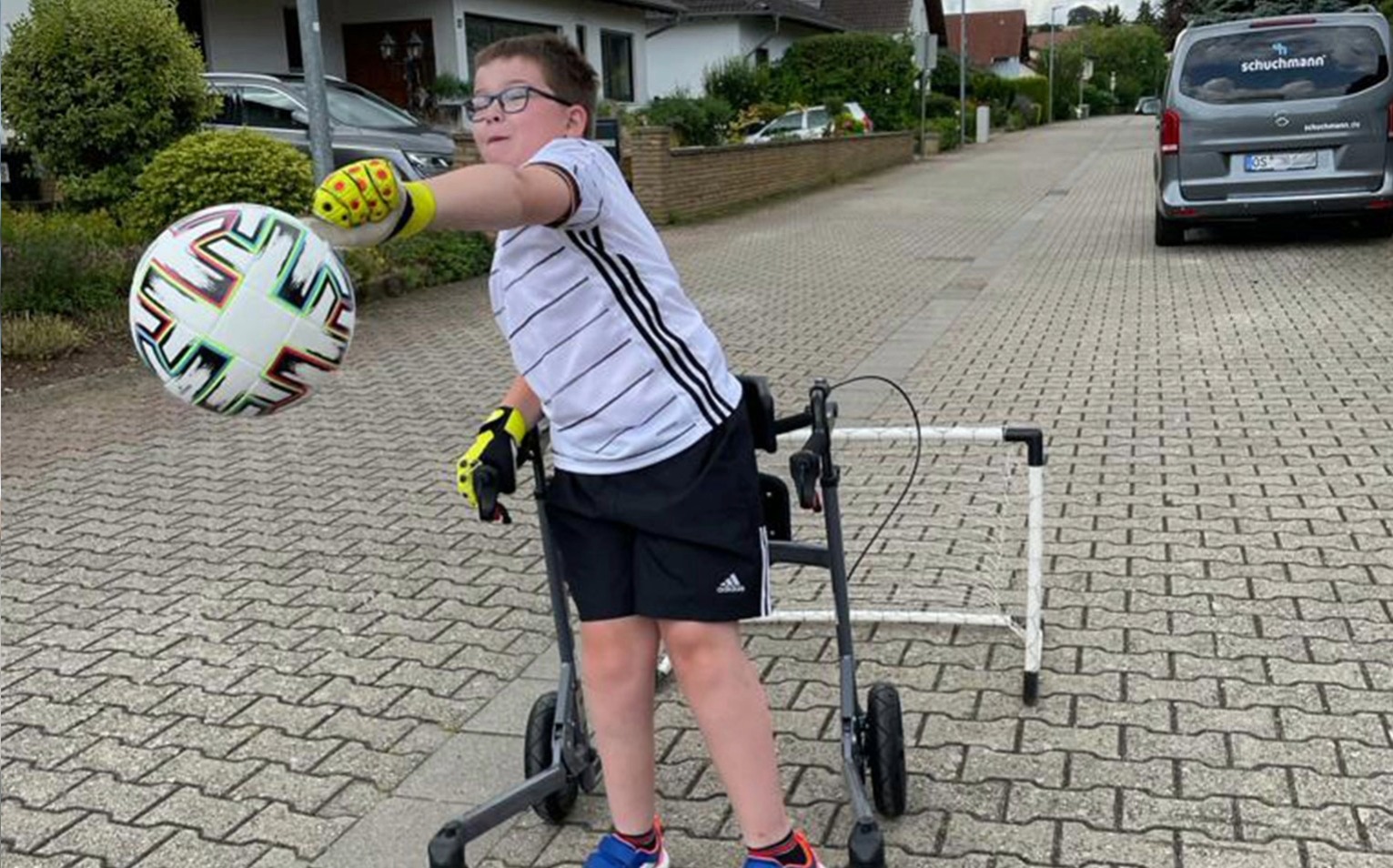
As for Toni, I try to let him grow up as much as possible like any healthy 5-year-old child. He should climb, have fun, run about, even if there’s always the risk of broken bones. My motto is: better a childhood with broken bones than no childhood at all.”
Does Toni use any aids because of his osteogenesis imperfecta, and if so, which ones?
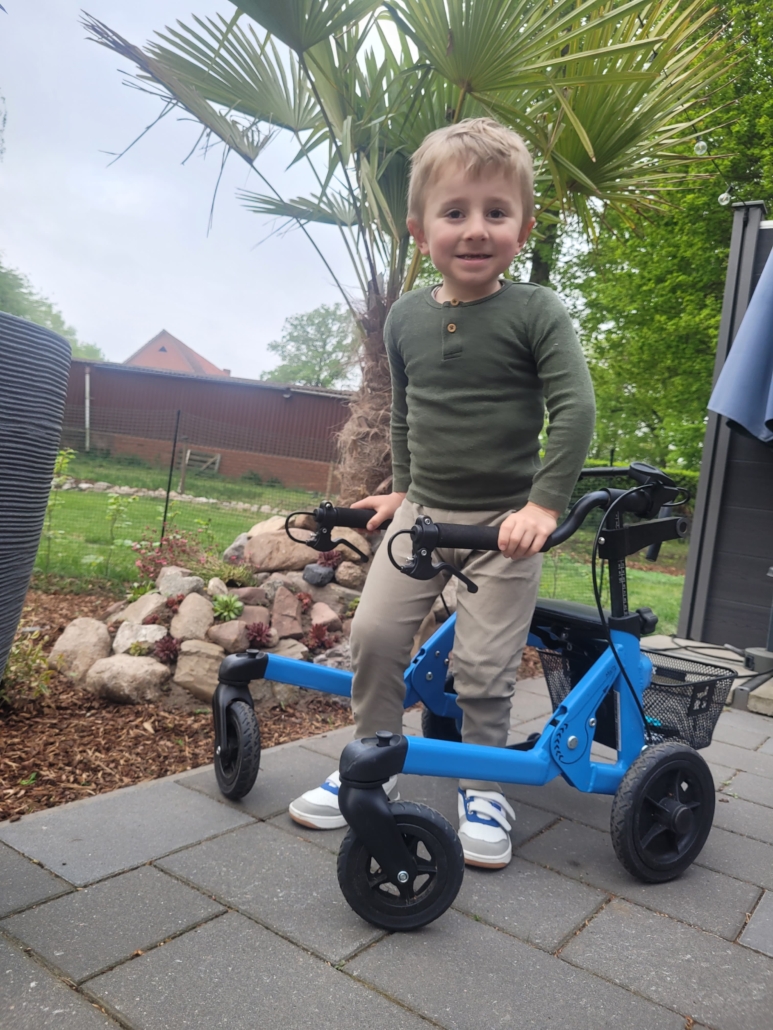
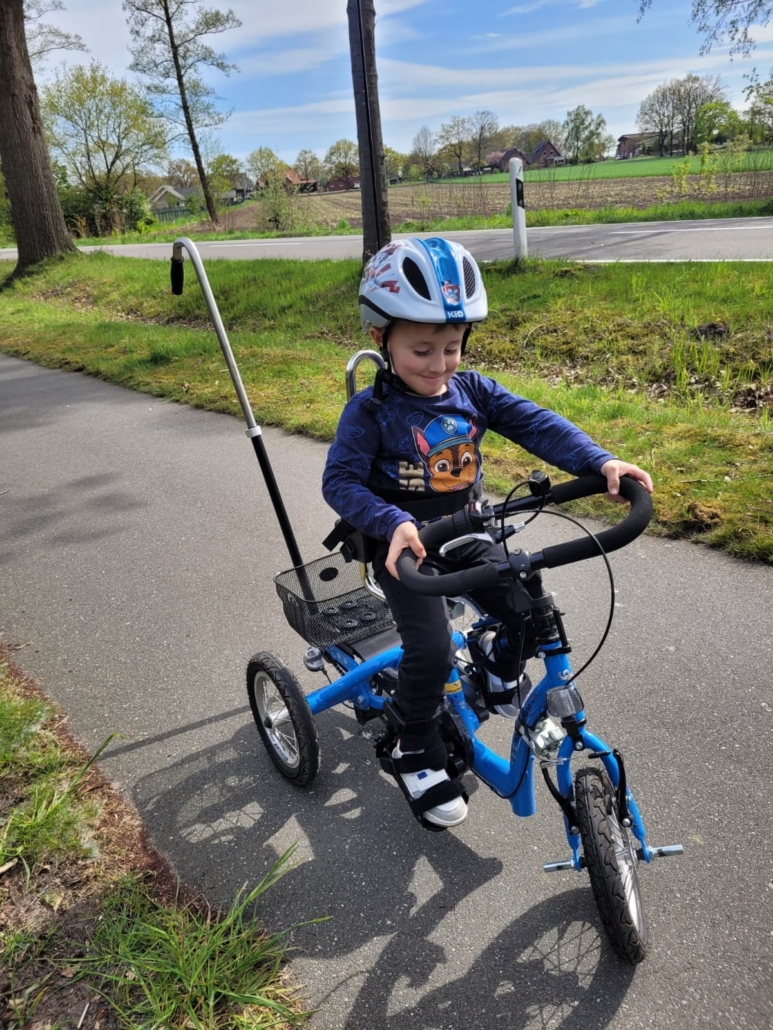
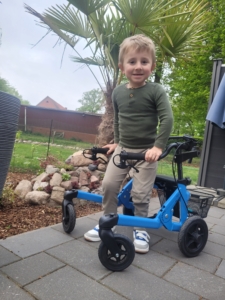
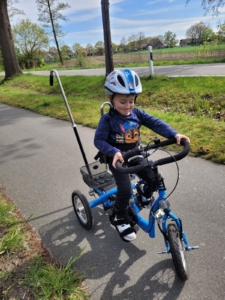
“Yes, Toni uses various rehabilitation aids. Among other things, we have a wheelchair, a malte. walking trainer and a momo tricycle..
The malte. is important for Toni for two reasons: firstly, after his operations, he literally has to get back on his feet. The malte helps him with this in the early stages. Secondly, the walking trainer is his ‘safe space’ at nursery. This way, the other children can’t accidentally run into him or bump into him.
We are absolutely thrilled with the momo tricycle. Toni loves cycling, and without a momo tricycle. tailored entirely to his needs, this wouldn’t be possible for him. Toni’s momo tricycle. is fully equipped with pelvic and trunk supports, harnesses and footrests. The supports keep him secure on the bike and the footrests help him pedal. Toni will probably need a pedal riser soon as well, as his legs are different lengths due to the many operations.”
Ms Burhorst, what advice would you give to other parents in a similar situation?
“Firstly, my advice to parents who have received the diagnosis is: seek support from other parents in the same situation. For example, there’s a brilliant Facebook group where parents have come together to share valuable tips. That’s also why I run our Instagram profile ‘oi_am_toni’. I deliberately post pictures of Toni because he is an incredibly happy boy and we enjoy our lives. It would have helped me back then to see such pictures to ease my fears about life with a ‘brittle bone’ child.
On the other hand, I advise parents: get a tricycle! Exercise is very important for OI, as it counteracts the muscle weakness typical of OI and thus also helps prevent fractures. Going for a quick bike ride is much easier than taking Toni swimming, so we incorporate it into our daily routine almost every day.”
Thank you very much, Ms Burhorst, for the in-depth conversation and the insights into your life with brittle bone disease. We wish you as a family, and above all Toni, continued joy in life and all the best for the future.